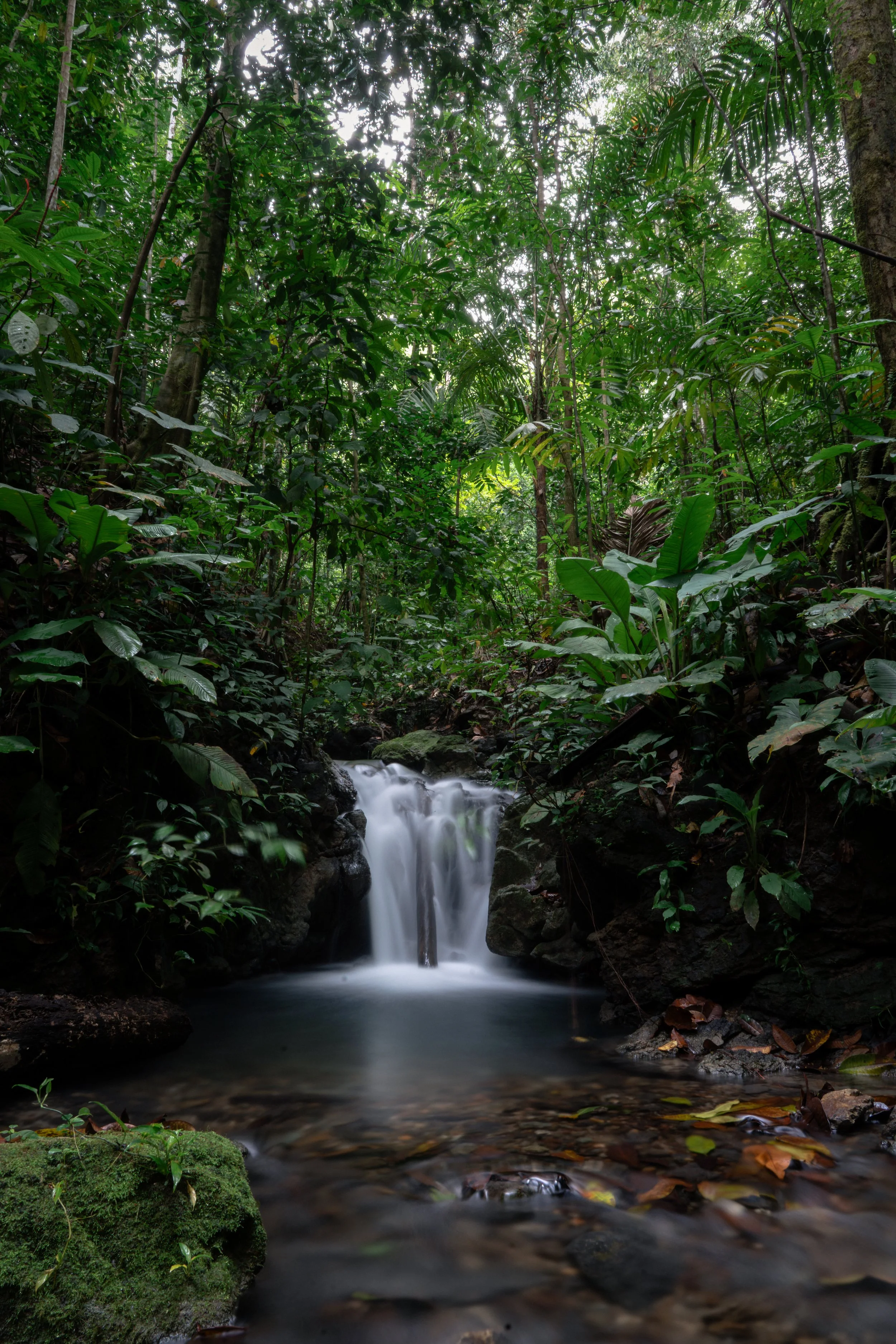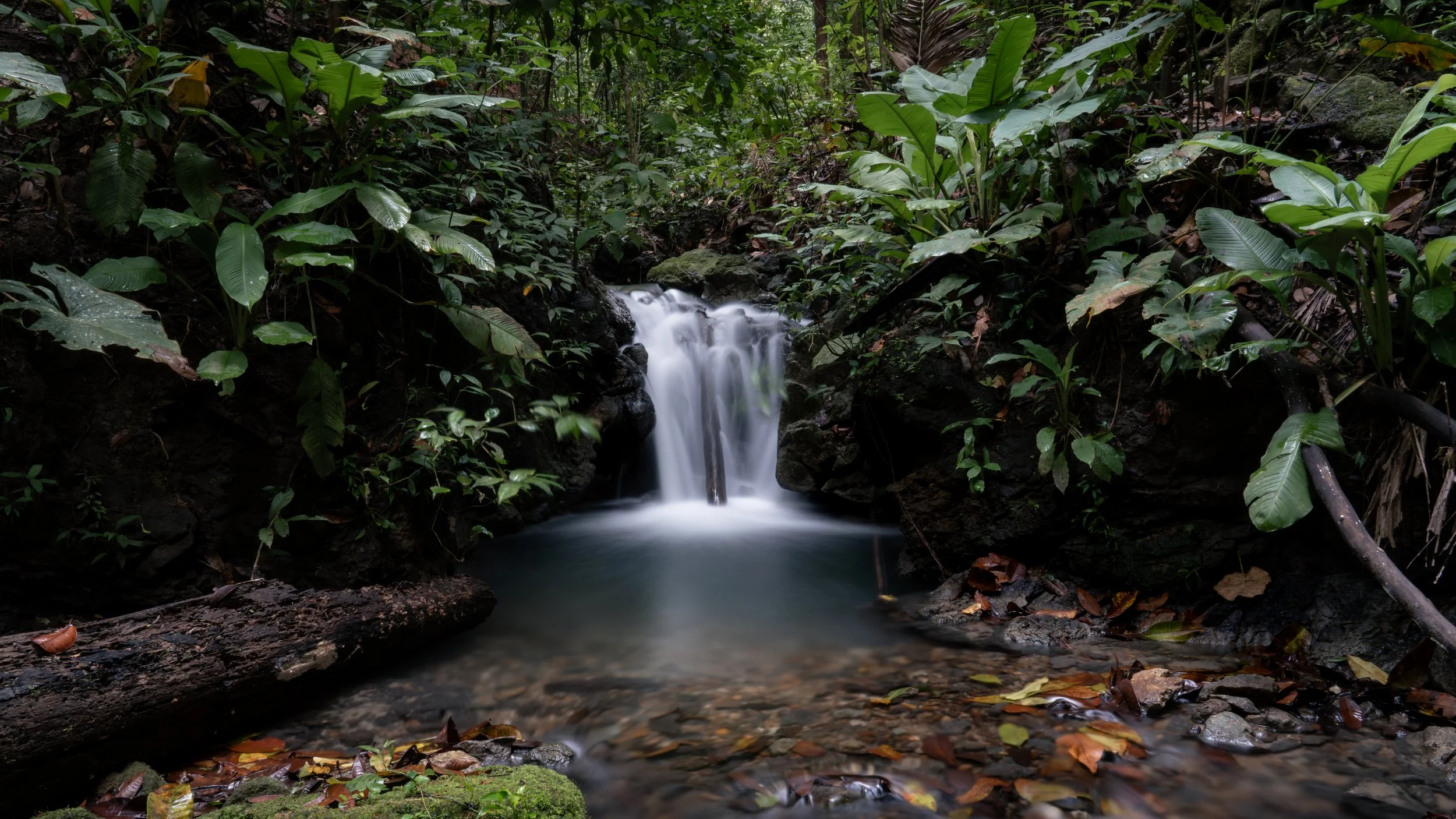
Osa Peninsula - The Living Current
Here, on Costa Rica´s Osa Peninsula, life does not accumulate — it circulates.
Every leaf, every movement, every breath is part of a shifting balance between growth and disappearance. The rainforest is dense with presence, yet shaped by constant loss.
As one of the most biodiverse regions on Earth, abundance and fragility exist side by side.
These images follow traces of that endless exchange — between light and shadow, birth and return.
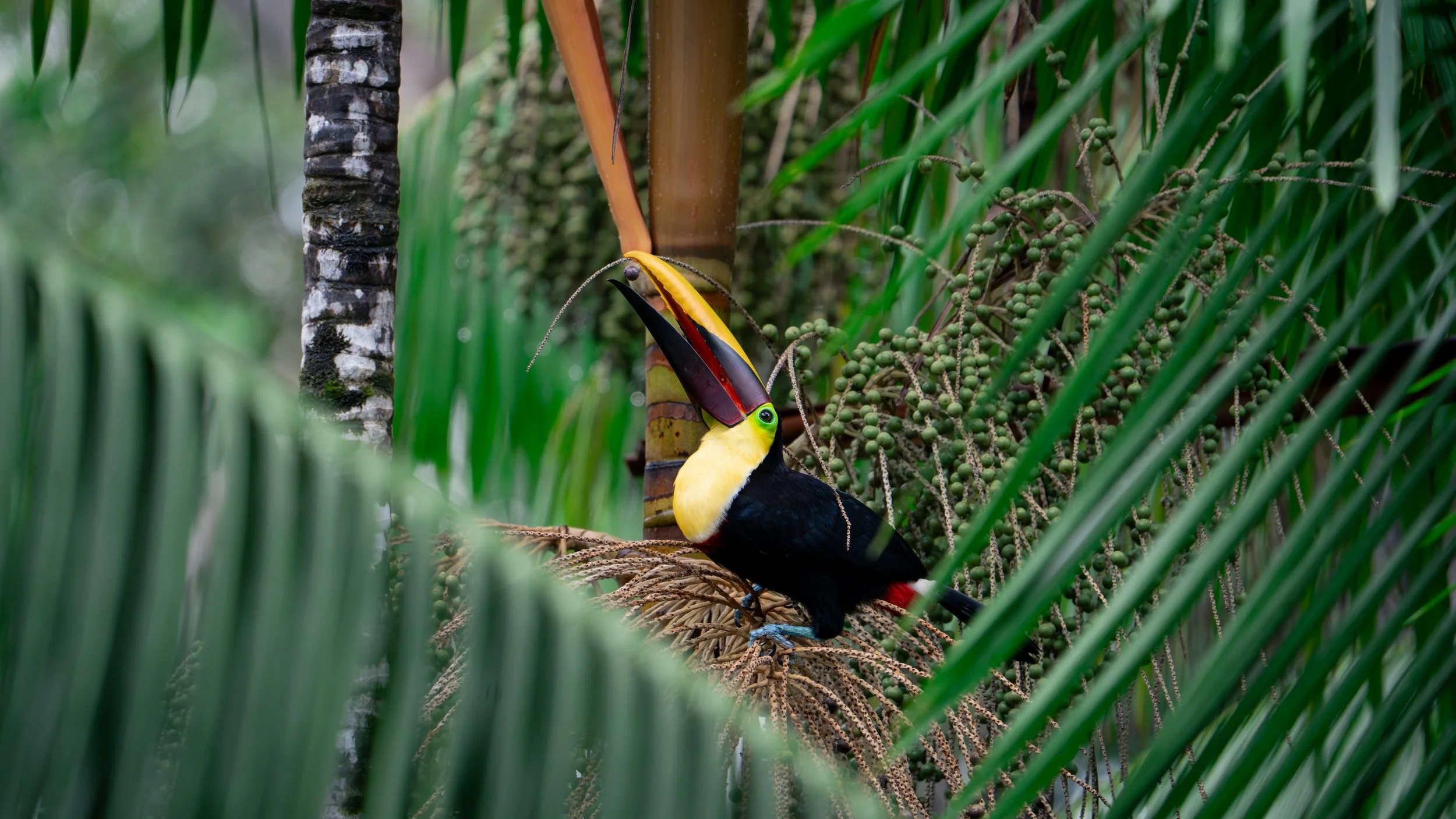
Their faces are alert, almost human in expression — every glance a question, every pause a calculation. In the dense green, nothing is neutral. Leaves conceal, branches betray, and silence can shift within seconds.
Life here is lived between curiosity and caution. Awareness is not a trait — it is survival.
White-faced capuchins move through the rainforest with restless attention.
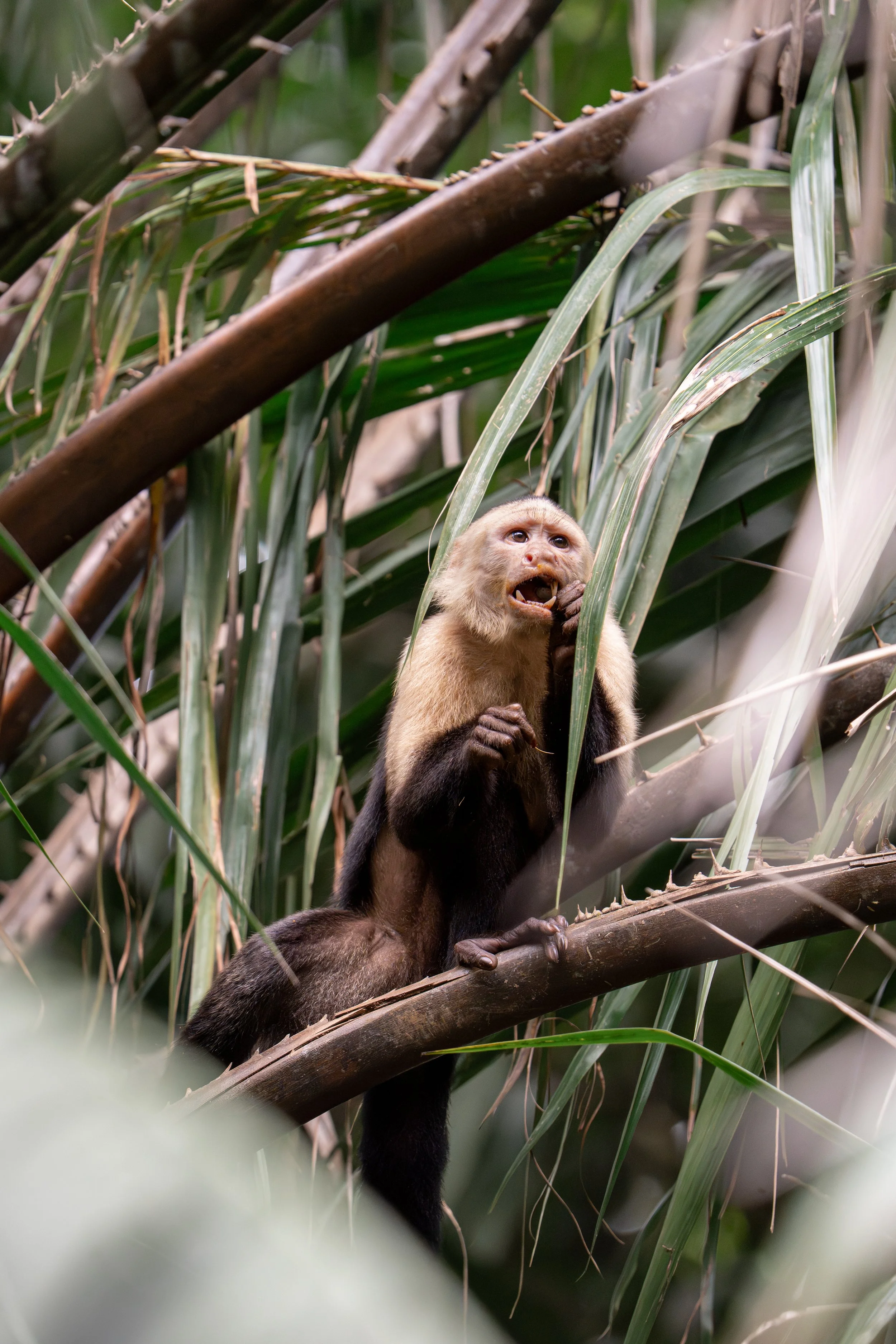
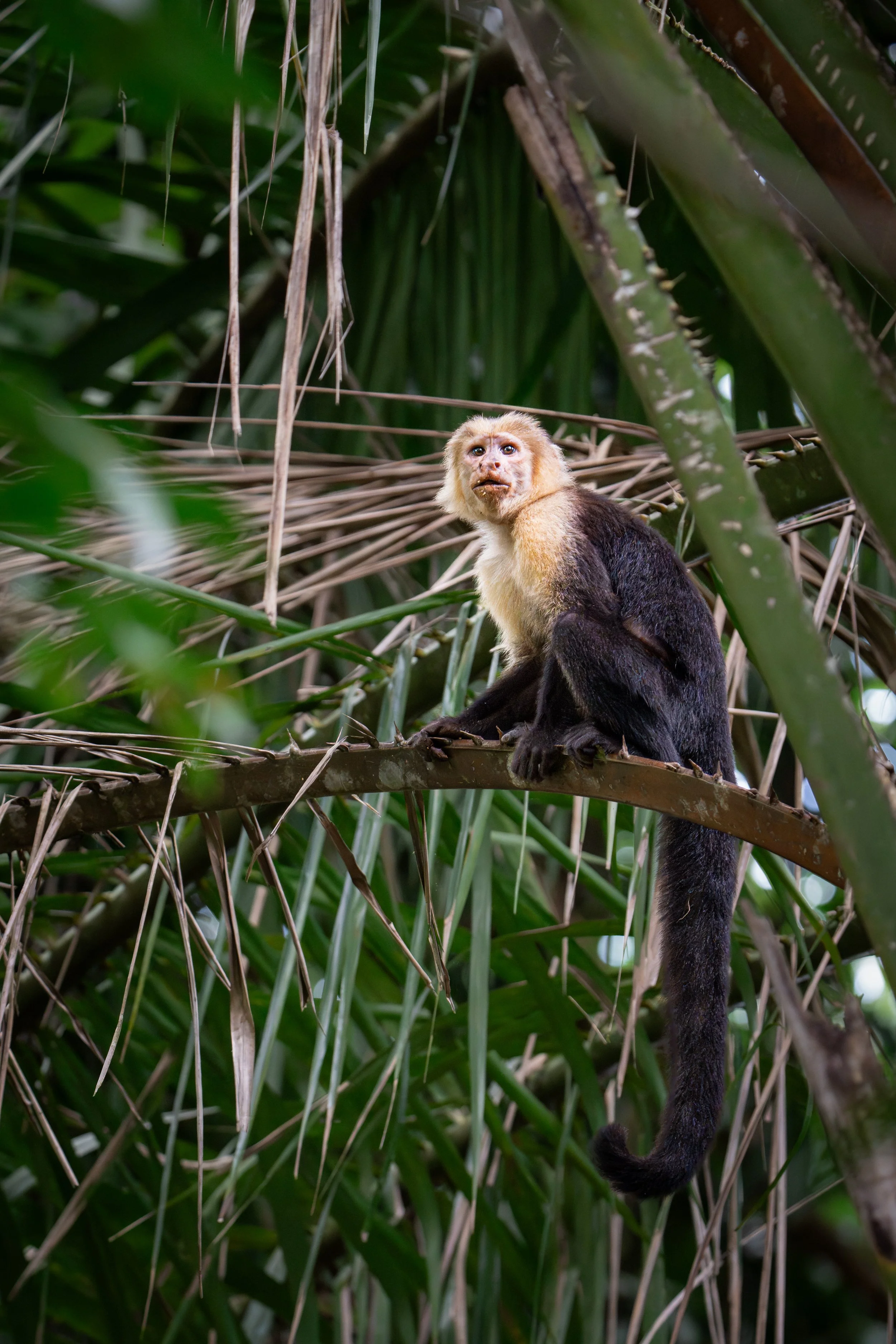
From the first weeks of life, infants cling to their mothers as they travel effortlessly through the canopy, guided by arms built for distance and a prehensile tail that turns the forest into a network of pathways.
The world is shown through movement — from branch to branch, from height to height — always under watchful care.
As this species is now endangered, every newborn carries more than life alone. Each infant becomes a quiet promise of continuity in a forest that grows more fragile with every passing year.
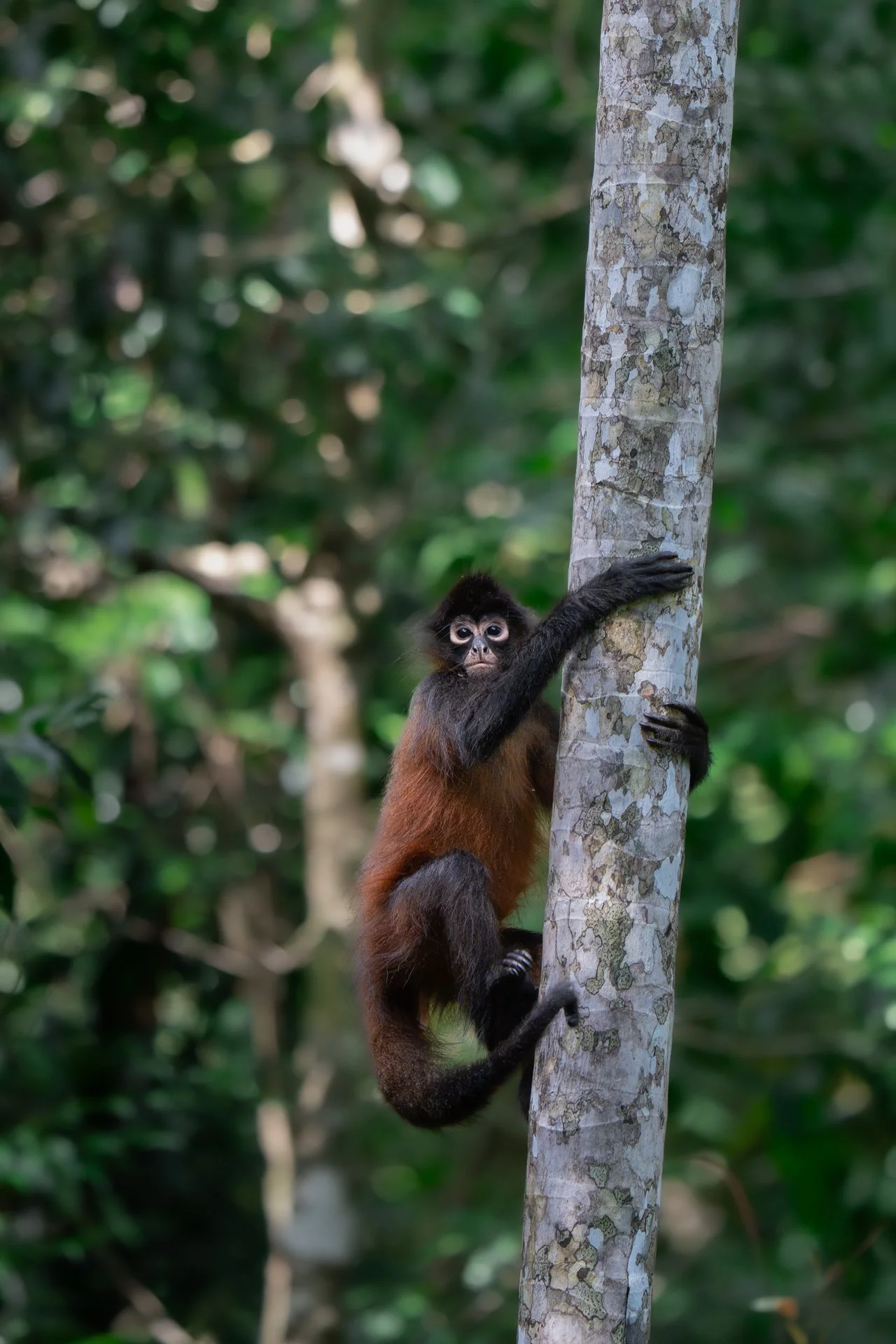
Geoffroy’s spider monkeys raise their young in motion.
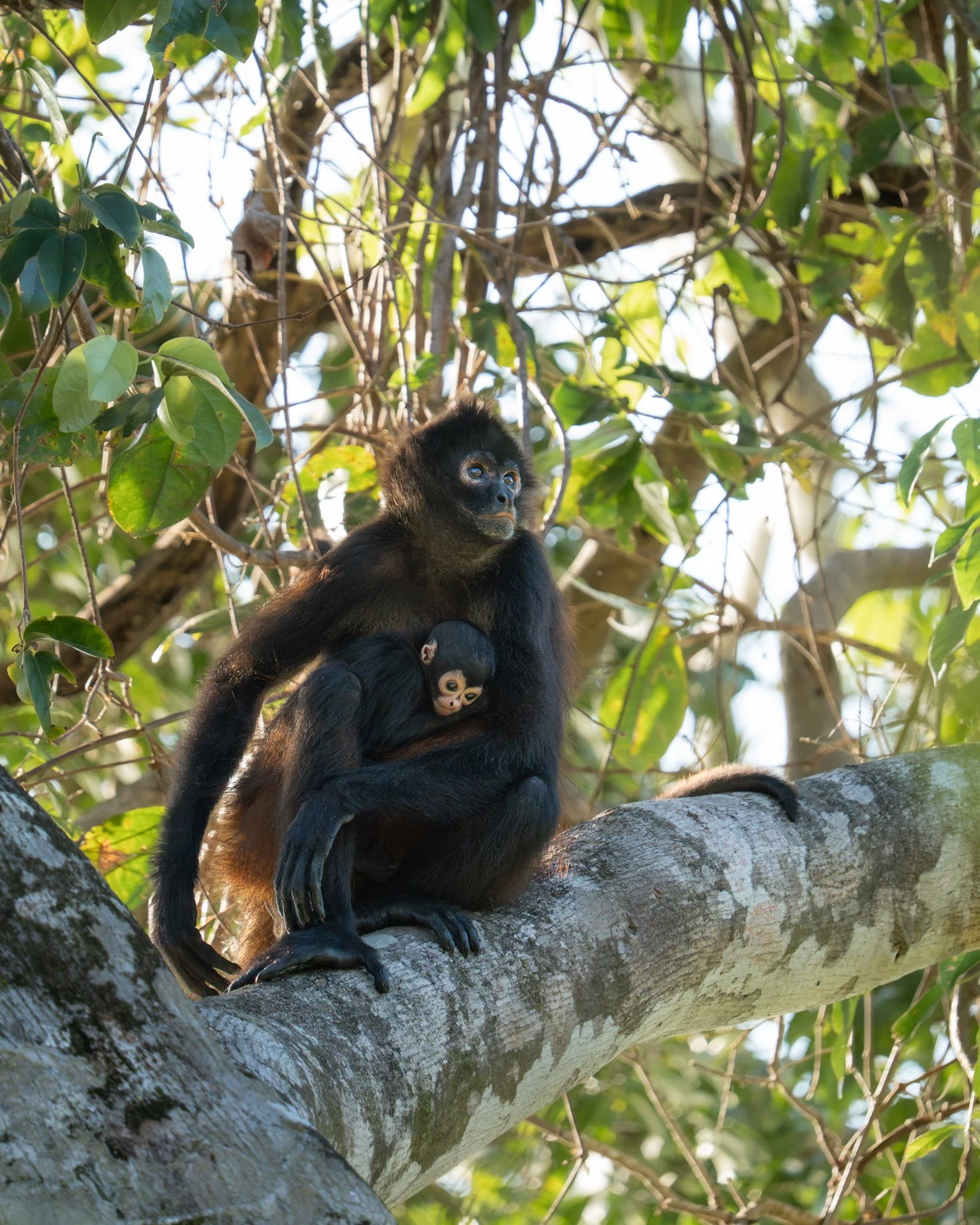
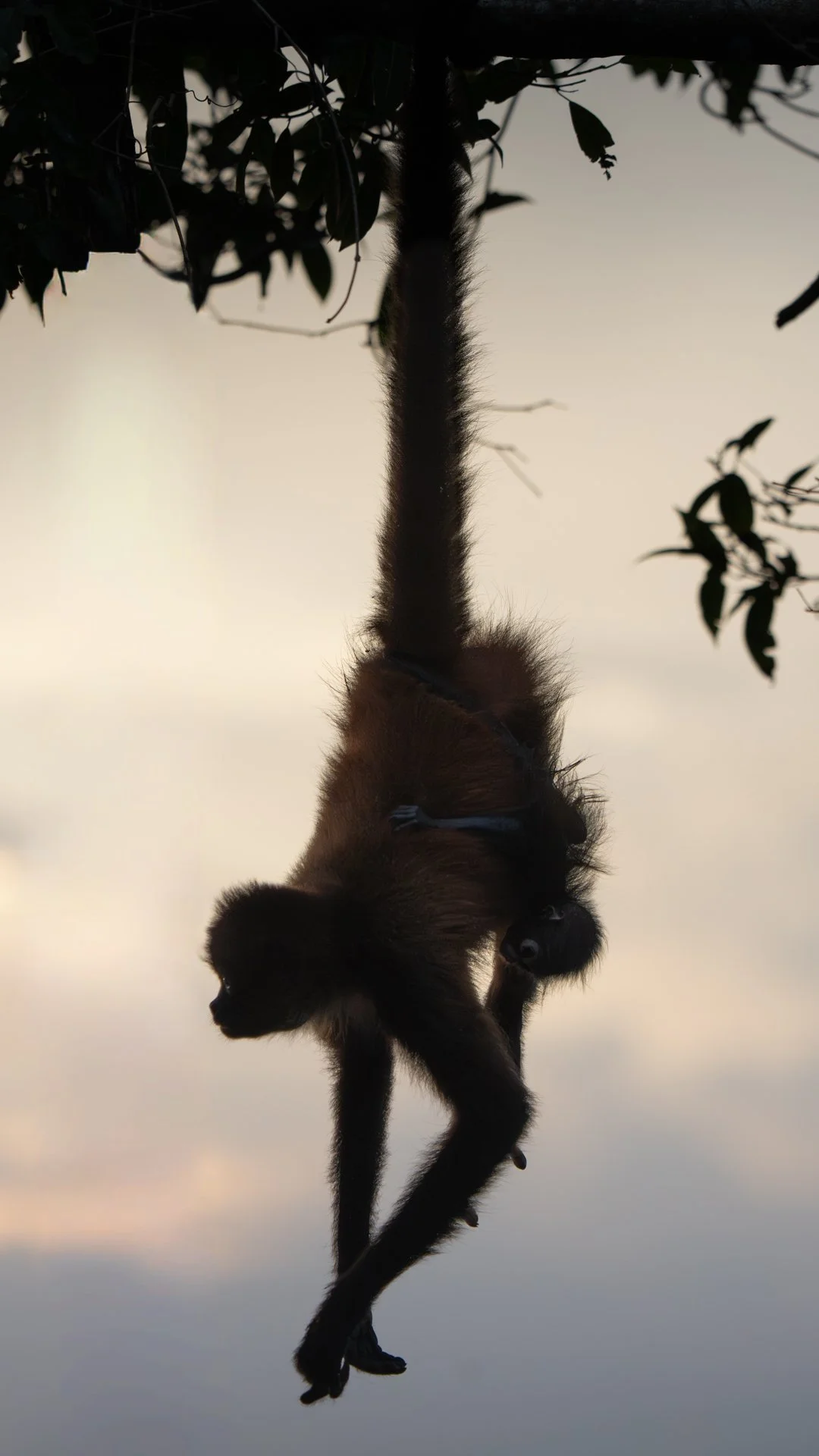
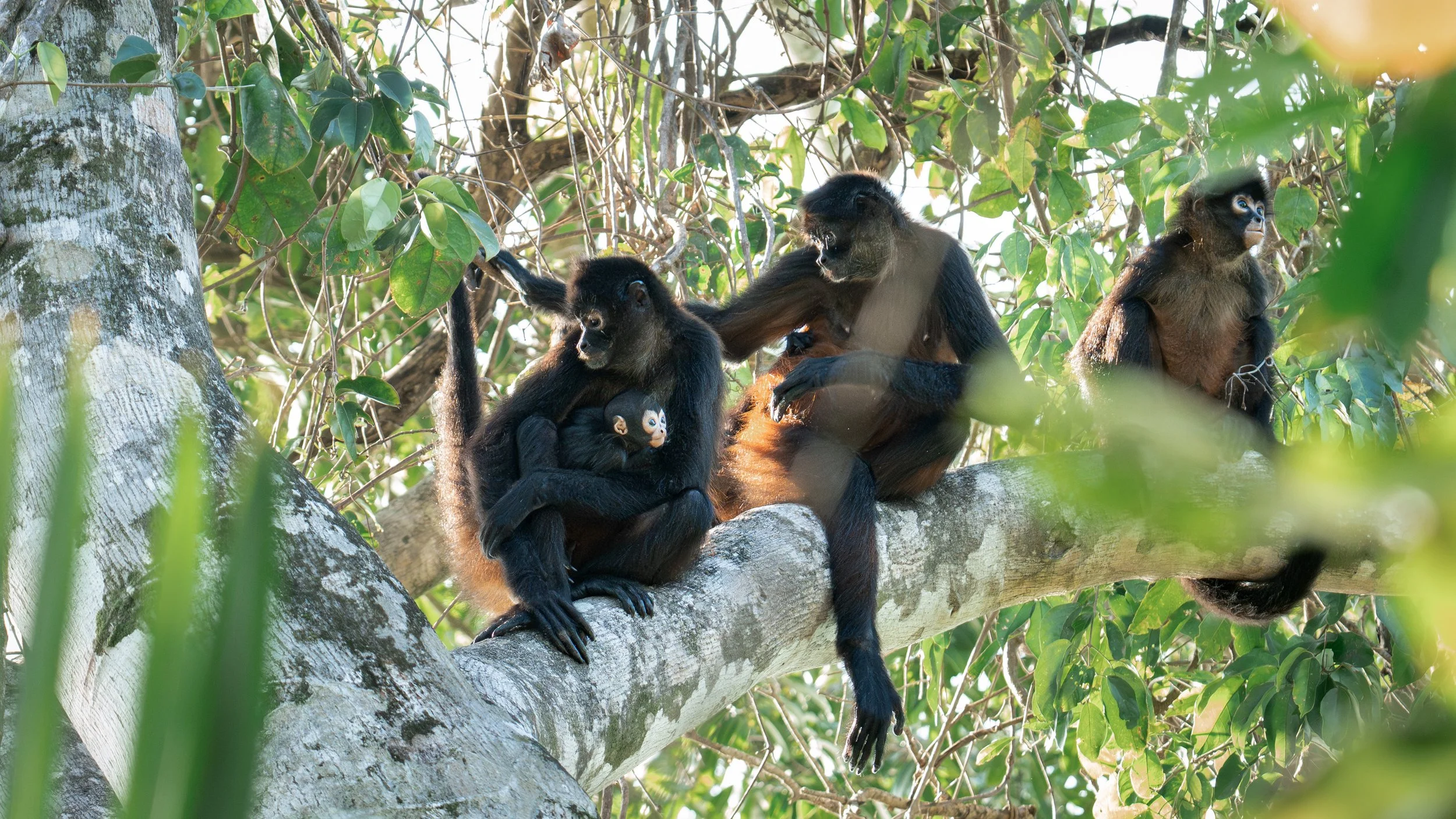
From the forest floor to the highest canopy, life unfolds in countless parallel worlds.
Each species moves within its own layer — intersecting, passing, rarely noticed, yet inseparably connected.
Layers of Life
-
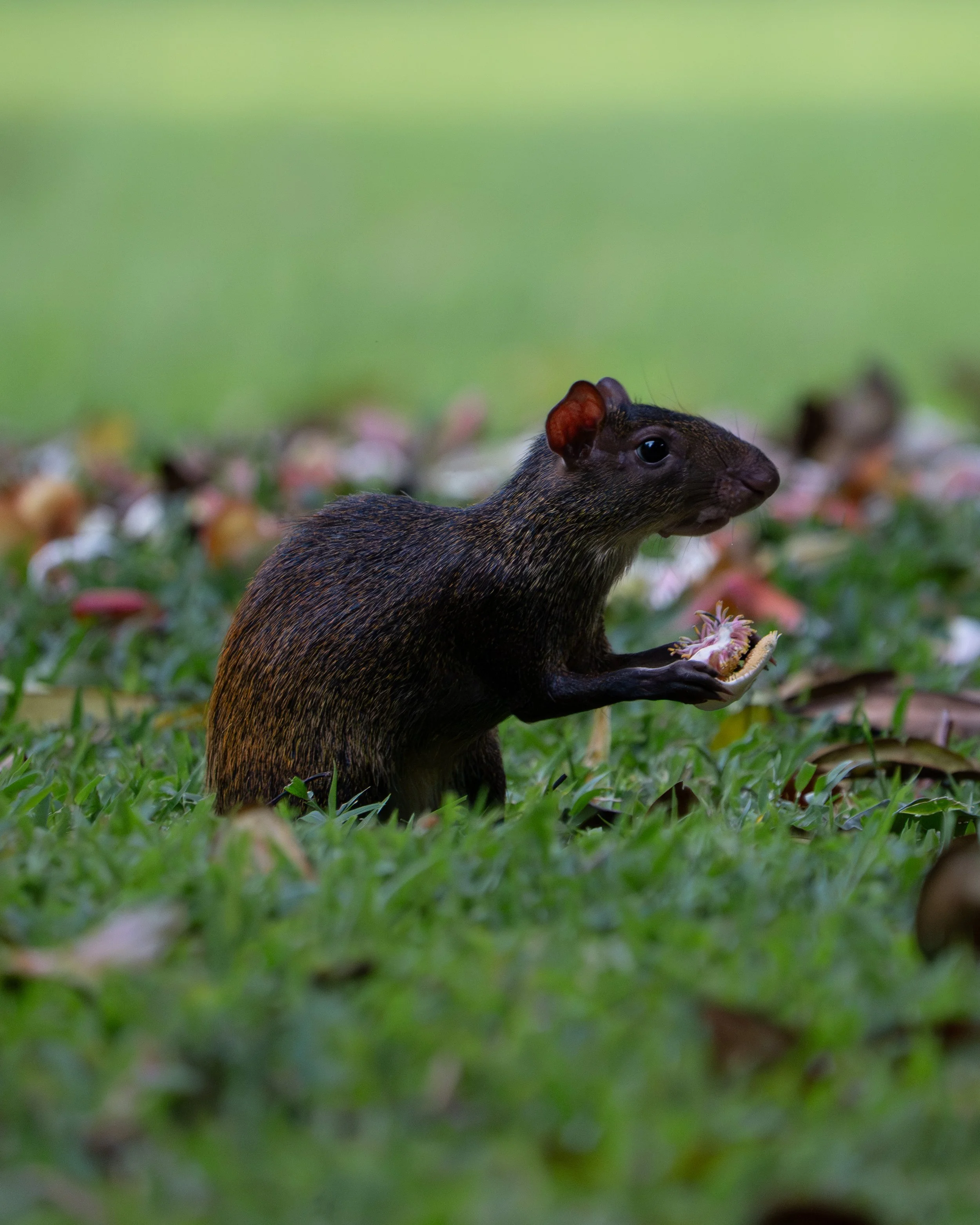
![Central American agouti]()
Central American agouti
-
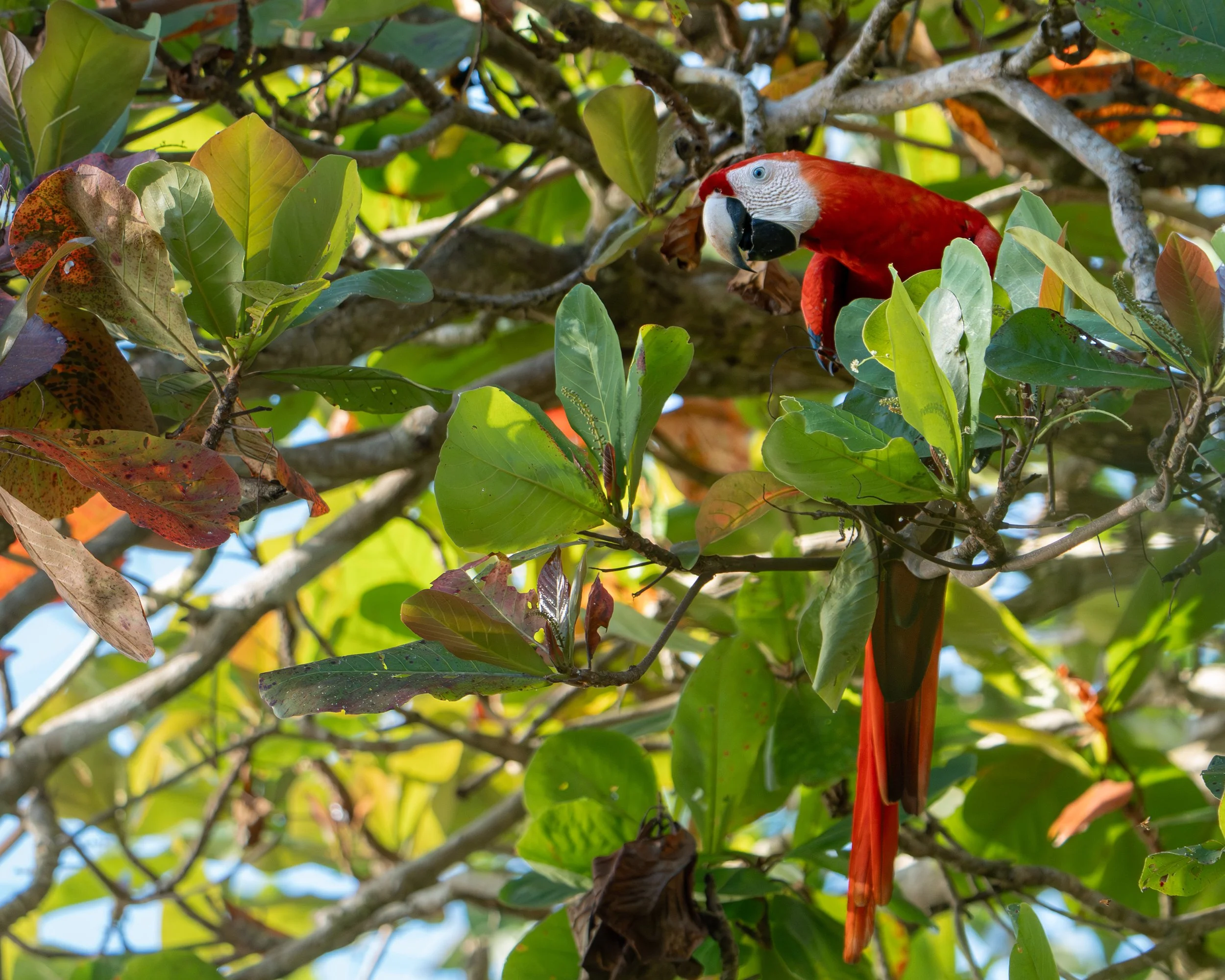
![Scarlet macaw]()
Scarlet macaw
-
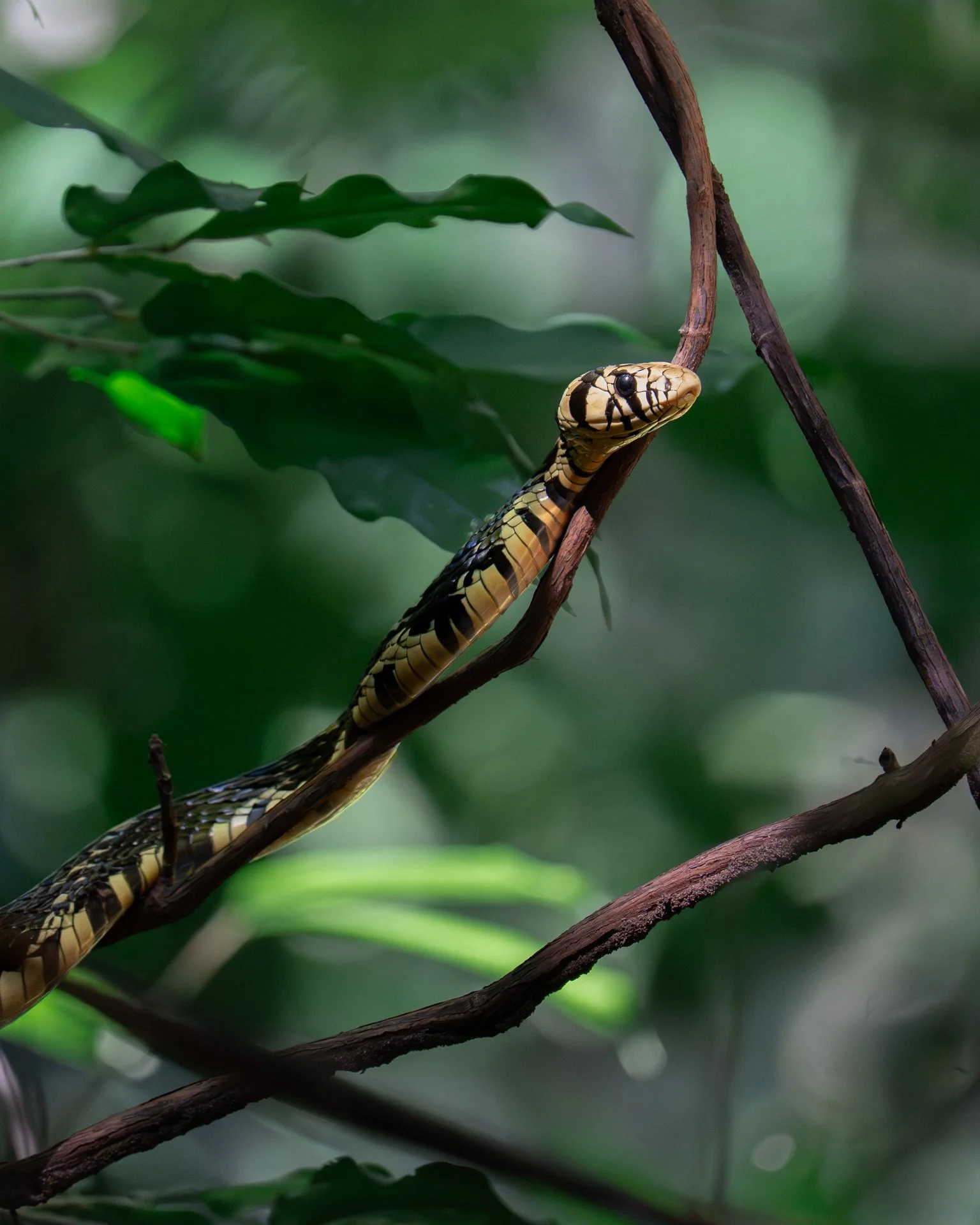
![Tropical Chicken Snake]()
Tropical Chicken Snake
-
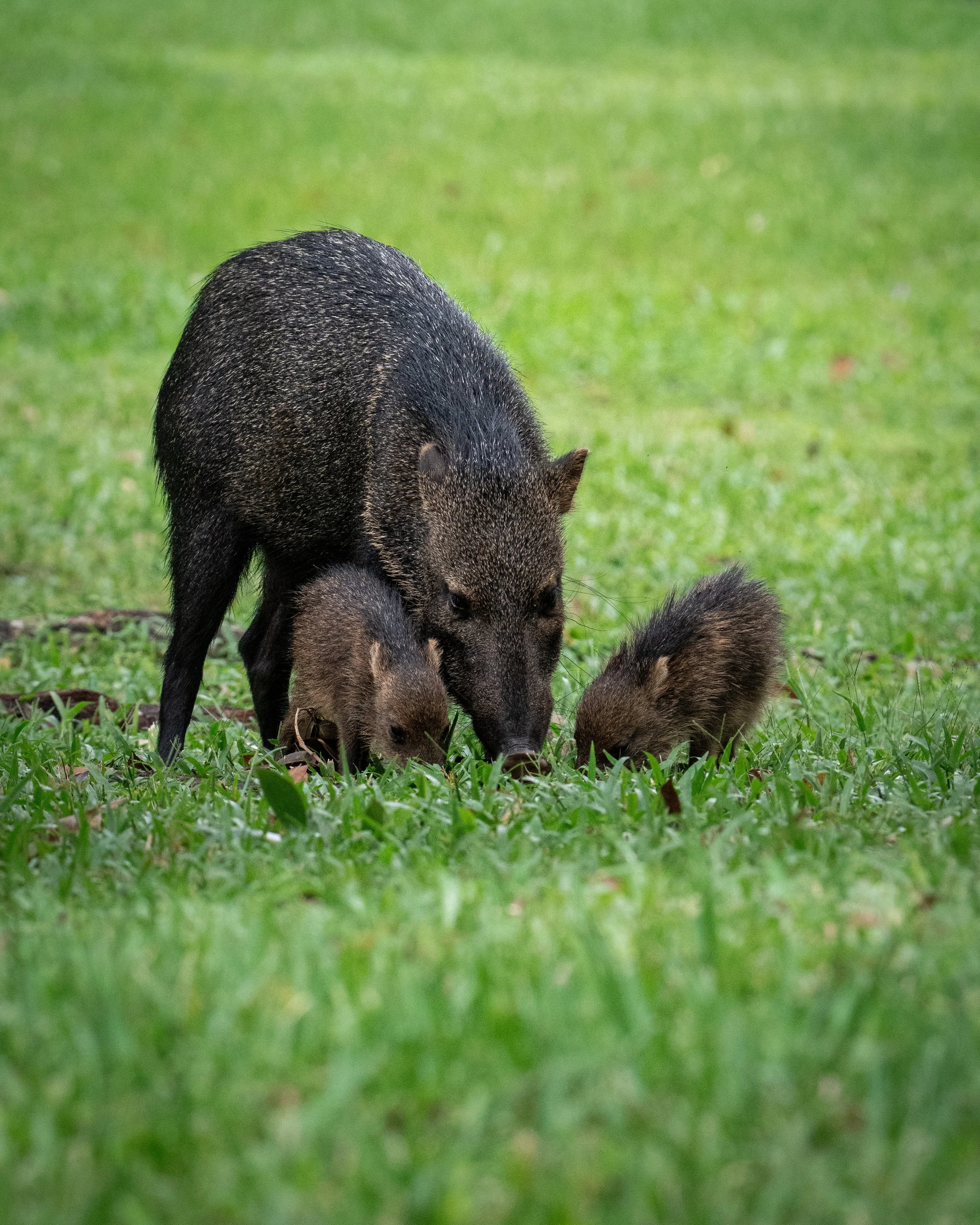
![Collared peccary]()
Collared peccary
-
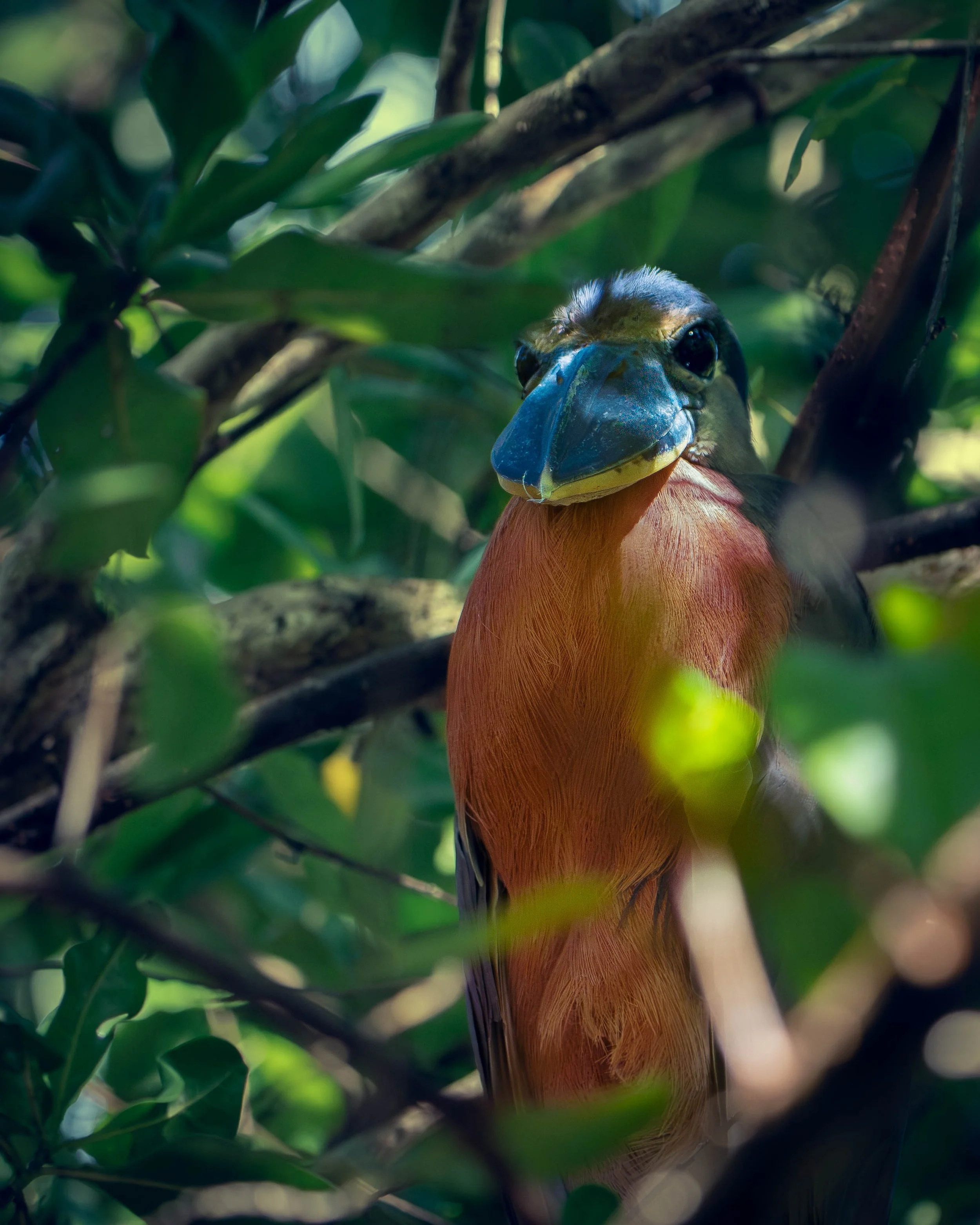
![Boat-billed heron]()
Boat-billed heron
-
![Geoffroy´s spider monkey]()
Geoffroy´s spider monkey
-
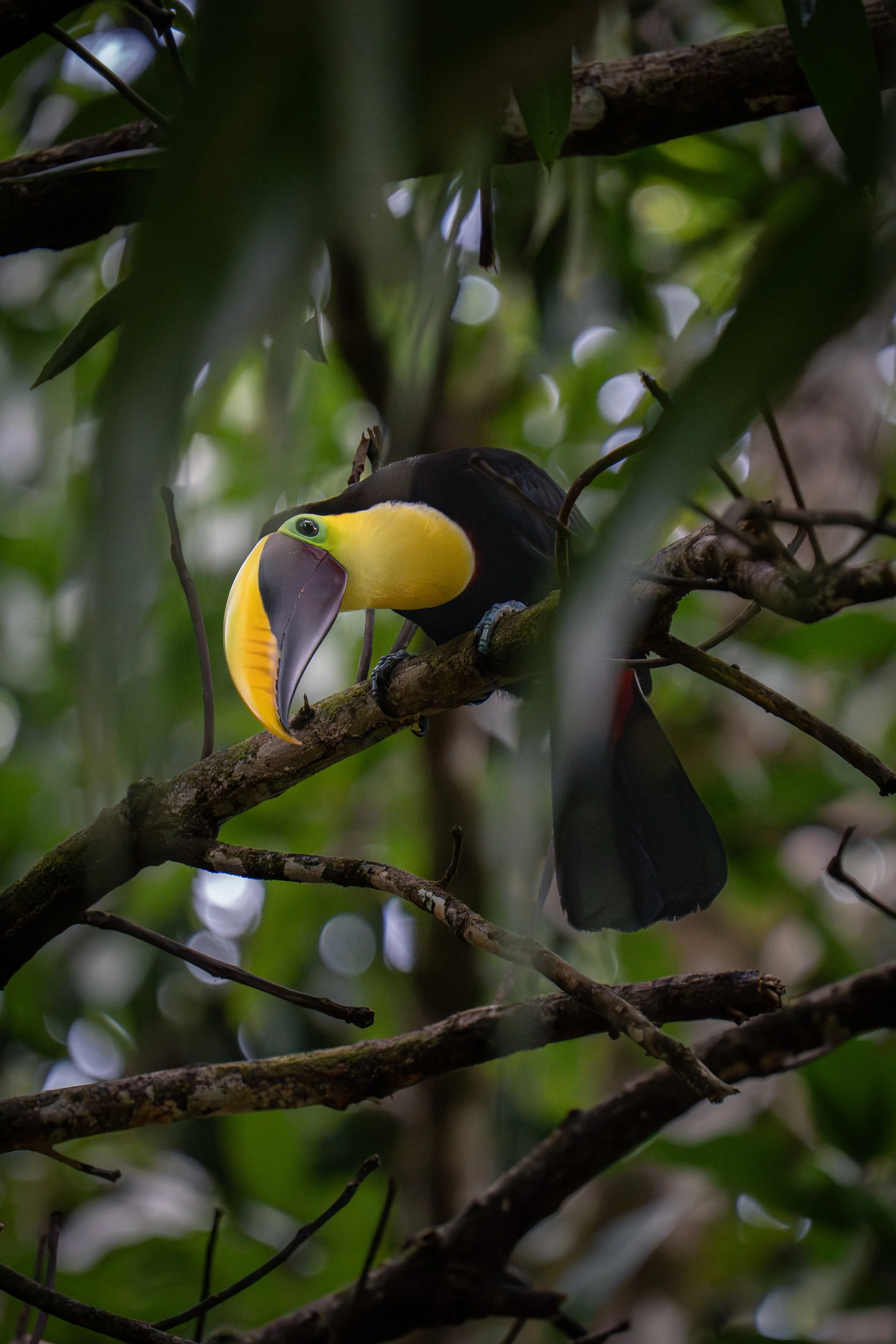
![Chestnut-mandibled Toucan]()
Chestnut-mandibled Toucan
-
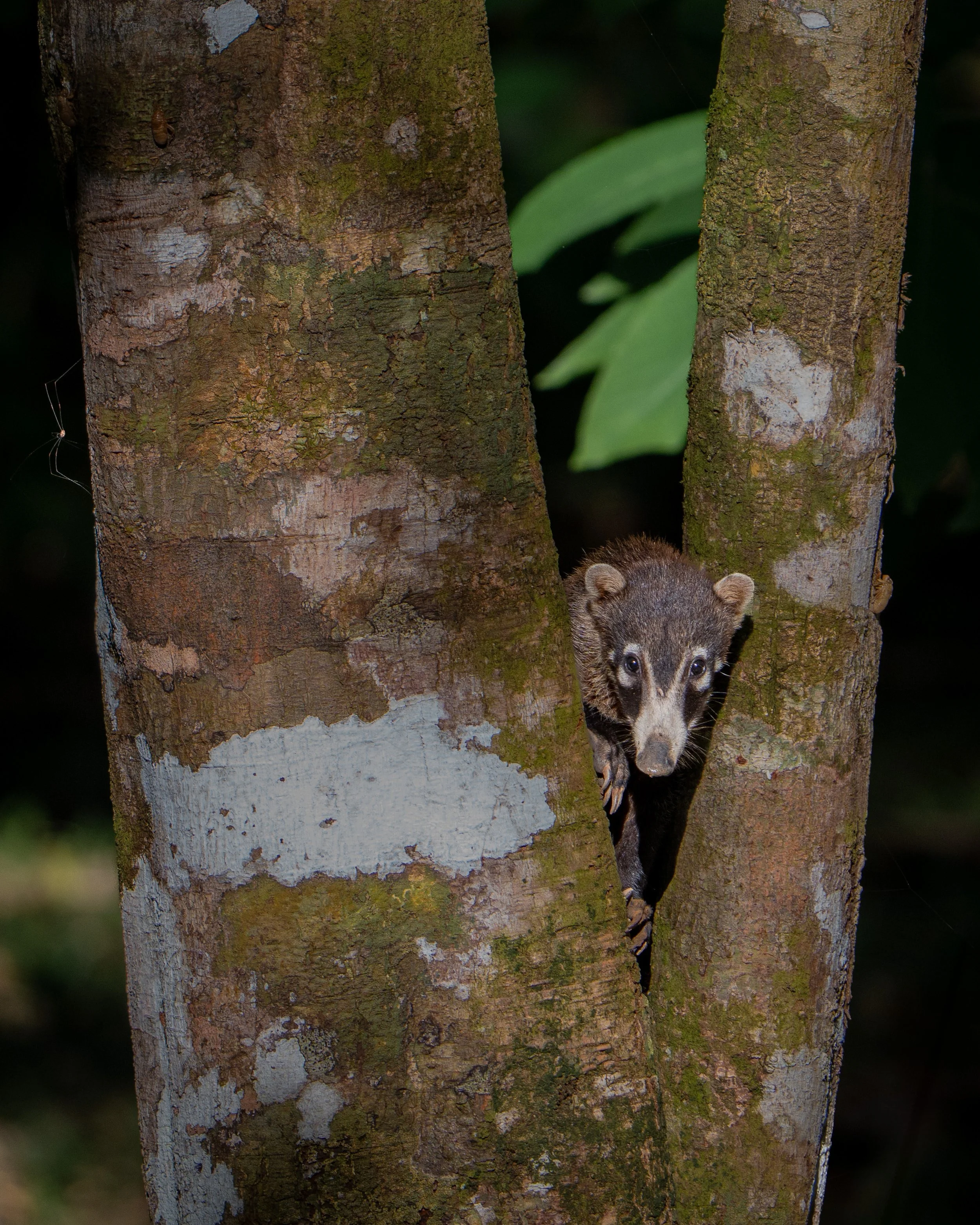
![White-nosed coati]()
White-nosed coati (and more)
-
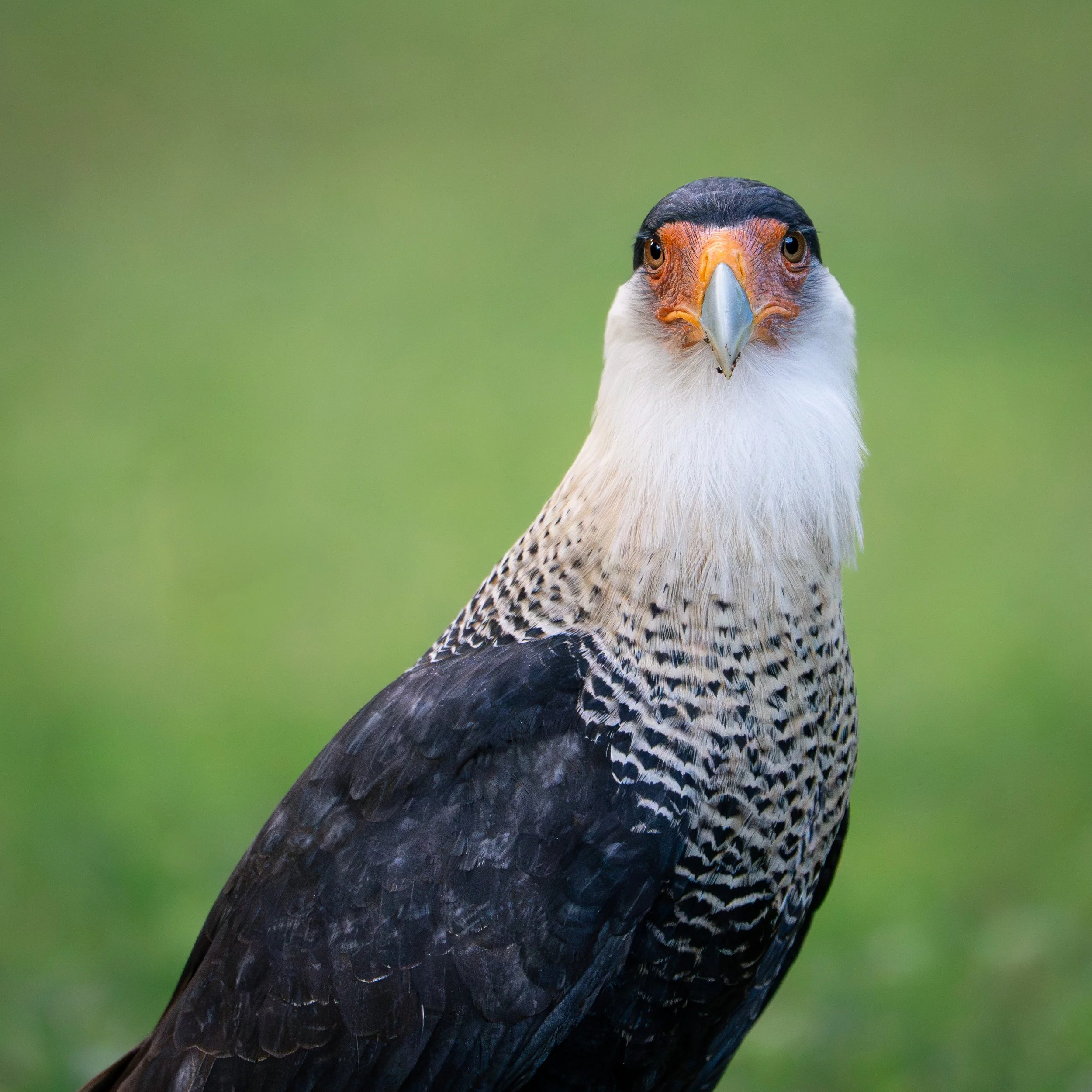
![Crested caracara]()
Crested caracara
-
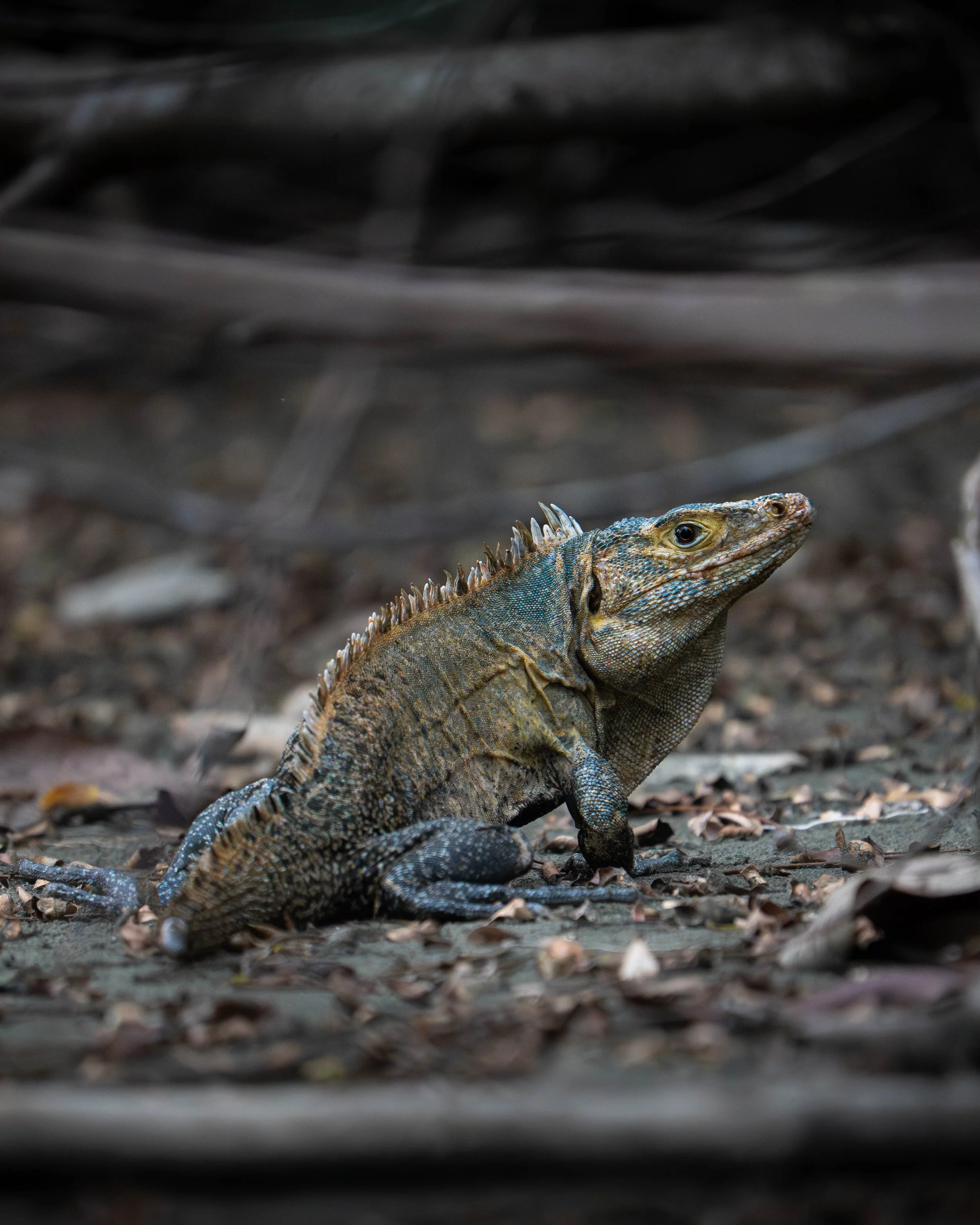
![Black spiny-tailed iguana]()
Black spiny-tailed iguana
-
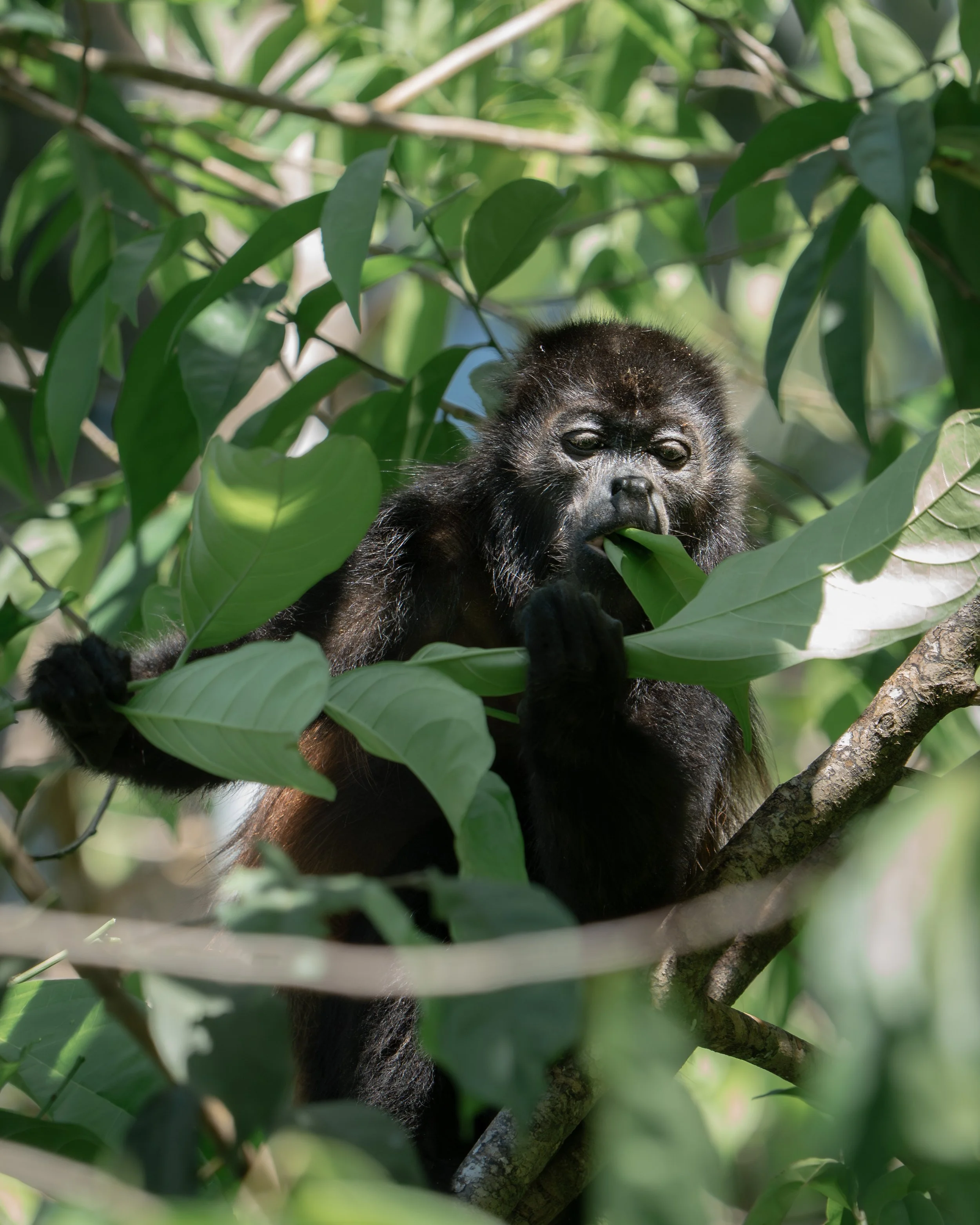
![Mantled howler]()
Mantled howler
The Unseen Majority
The rainforest is not silent — it overflows with sound, with calls, wings and constant movement. And yet, so little of it becomes visible. This world is heard far more often than it is seen. Some encounters last only a moment, before the forest closes again.
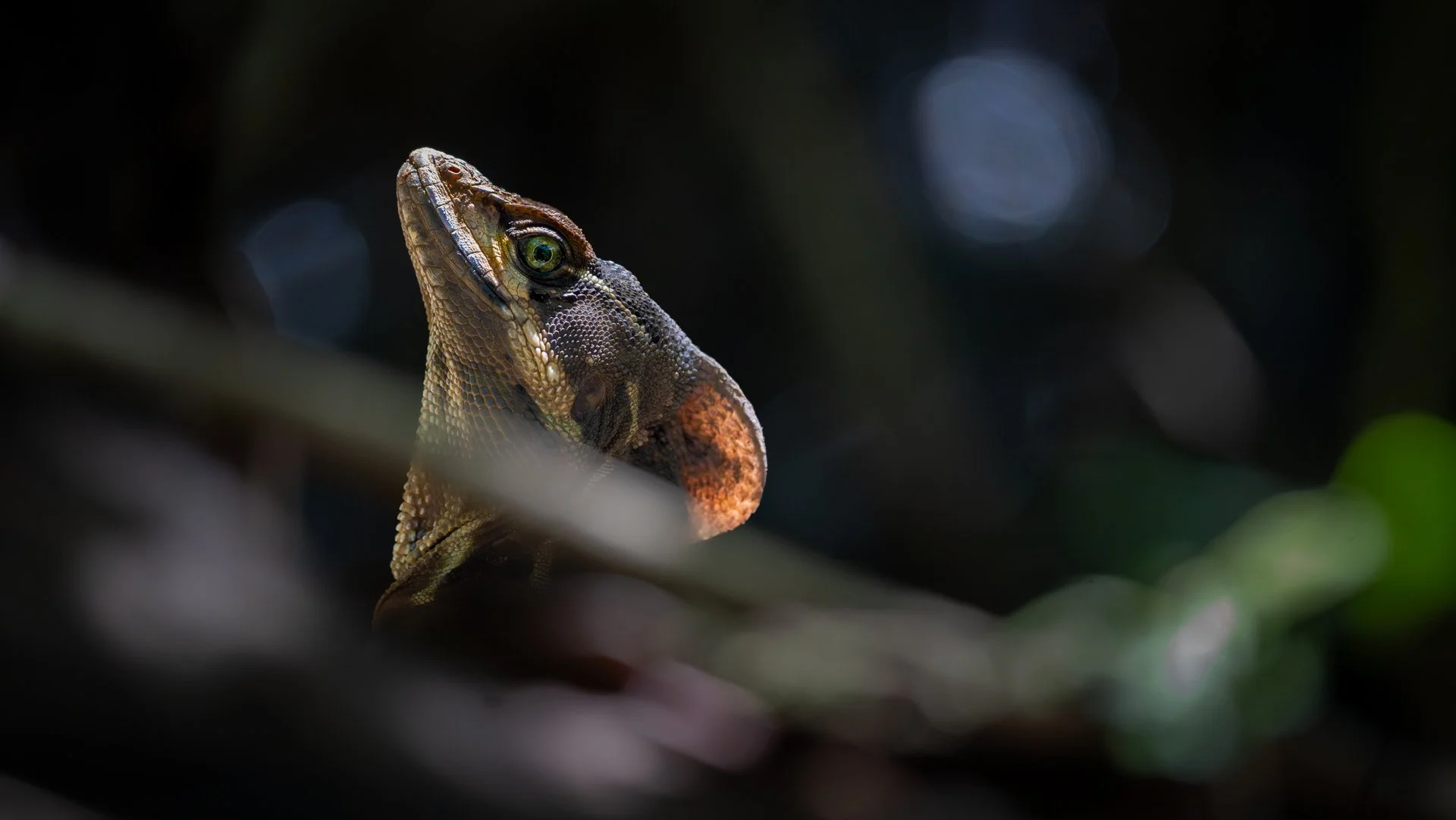
Brown basilisk
What endures here does so not by chance.
Across the Osa Peninsula, decades of careful protection have allowed the forest to remain what it once was — a living refuge shaped not by extraction, but by restraint. At places like Bosque del Cabo, where I had the privilege to stay, conservation is not a label, but a continuous act, practiced day by day for nearly forty years.
Because of that quiet commitment, the rainforest still breathes in full complexity. Species return, young are born, fragile rhythms continue. This forest is not only a reminder of what is vanishing elsewhere — it is proof of what can still remain, when space is given back to life.